Book log
Reading goal: 2 books per month I almost exclusively read fantasy, although I do branch out every now and then when I feel like I need a palate cleanser. There's just nothing like a good swords-and-sorcery setting for me. I also absolutely love middle-grade fiction and I've been reading a lot of it lately.My reviews may contain spoilers, so if you're hoping to read a book on this list, think twice before clicking that review button! They're all collapsed by default for your protection. I only review a book if I feel like I have something to say about it, so if a book doesn't have a review, I either liked it fine or felt sort of neutral about it.
Currently Reading

The Way of Kings (reread)
by Brandon Sanderson (The Stormlight Archive #1)

Legion
by Brandon Sanderson
Finished June 2026

The Lost Metal
by Brandon Sanderson
Finished June 2026

The Bands of Mourning
by Brandon Sanderson
Finished May 2026

Shadows of Self
by Brandon Sanderson
Finished May 2026

The Alloy of Law
by Brandon Sanderson
Finished May 2026

Elantris
by Brandon Sanderson
Finished May 2026

The Promised Neverland #1
by Kaiu Shirai
Finished May 2026 (reread)
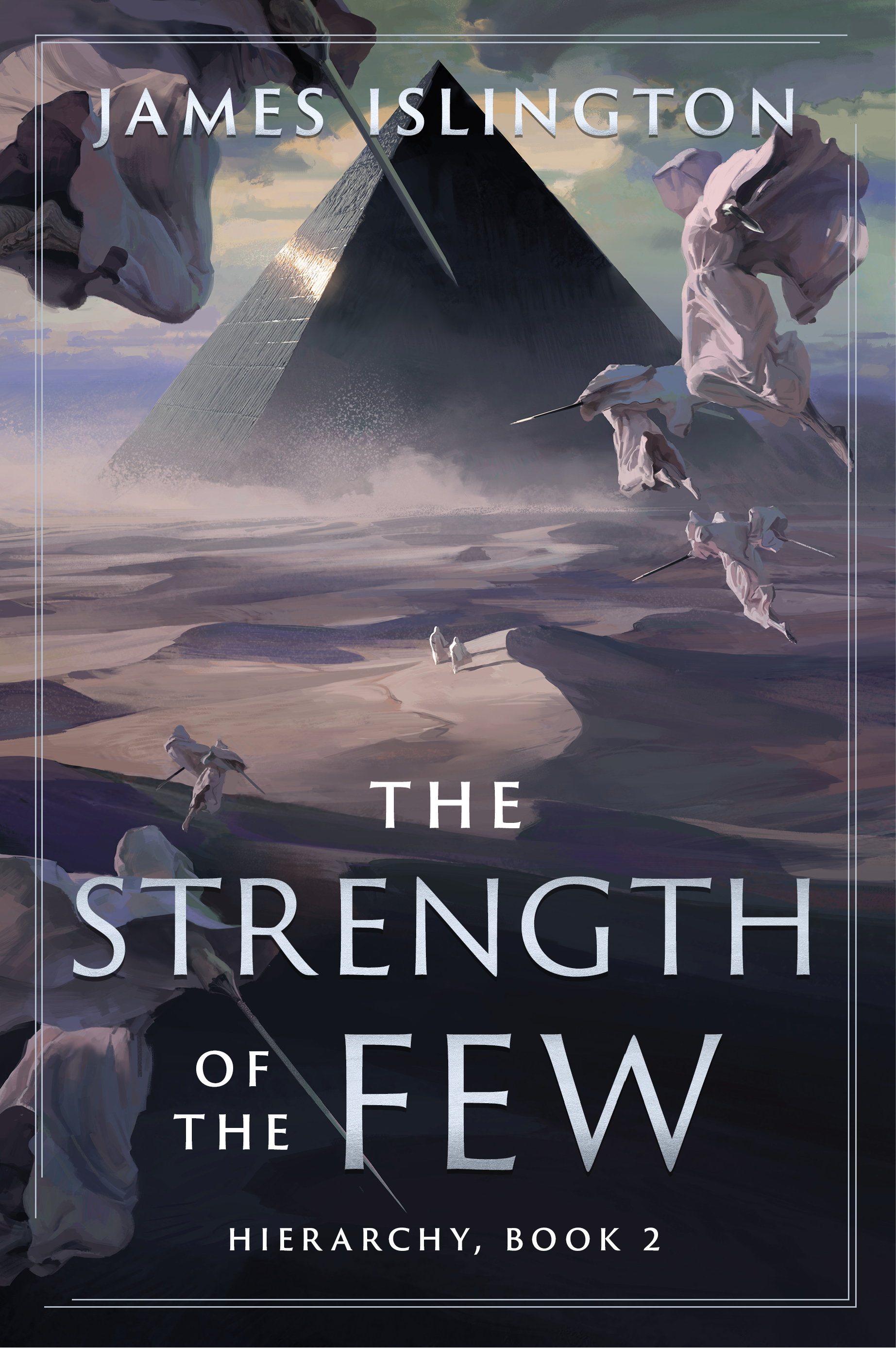
The Strength of the Few
by James Islington (Hierarchy #2)
Finished May 2026
Show review ⏵
Okay, I'm giving up trying to be cool about this. This series slaps incredibly hard. I laughed. I cried. I felt sick. I stared at the wall in numb shock for minutes at a time. I screamed aloud at the ending. I'm not going to make it over a year until the next book. You'll find me lying facedown on the pavement outside Barnes & Noble until The Justice of One is available. Read this book.
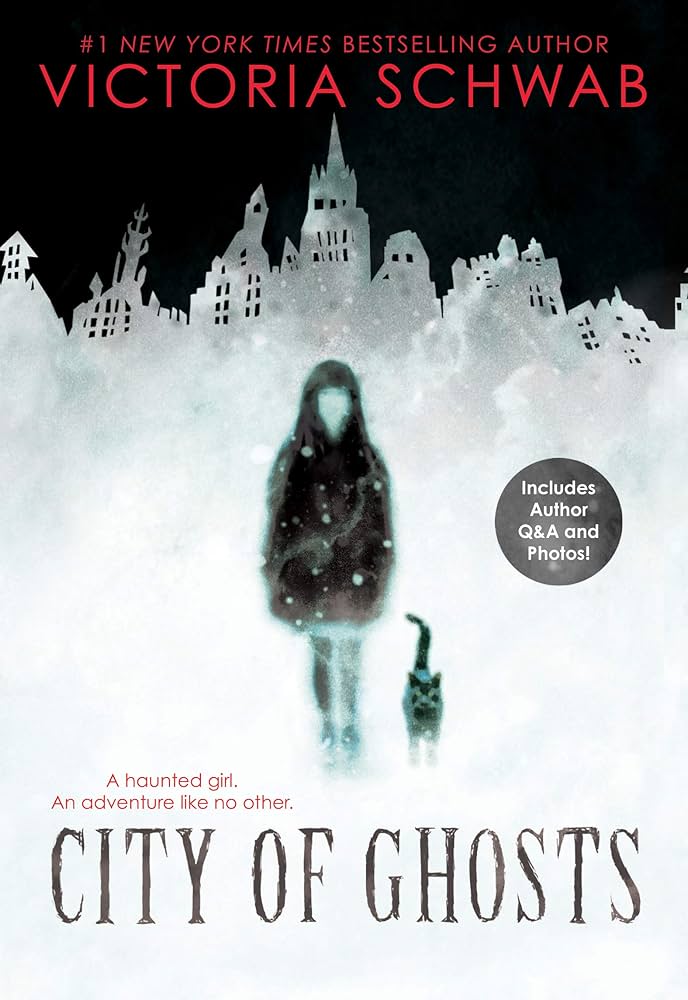
City of Ghosts
by V. E. Schwab (Cassidy Blake #1)
Finished April 2026
Show review ⏵
I love reading children's scary books. I love horror in such a limited, specific way, and it's really hard to find adult fiction that scratches a "spooky" itch without being gross, gory, or getting into topics I don't want to read about. Basically, I love the atmosphere of a spooky story, and I even like to be scared, but I don't want to feel disgusted, and so much adult horror relies on disgust. The limitations of horror written for younger people means it's always perfectly within my tolerance, but also, sometimes the restriction of not using easy fallbacks like gore or sexual horror means that the authors have to be more creative with what's scary about their story. I think this leads to more interesting concepts and sometimes scarier ideas than if you were writing without those constraints. I've read some of V. E. Schwab's adult fiction, and she always delivers something sad, or something strange, or both. I was really excited to stumble across this book in the children's section because I didn't know she wrote anything for middle grade. I was really excited to see how her signature melancholy would translate to a children's book. It turns out, it reads almost exactly the same, except the characters are younger, which is exactly what I look for in a children's book. It's a perfect ghost story with interesting characters and a really good hook. You can tell the author has visited every location the characters go to in Edinburgh, and the descriptions are detailed and moody. I was suitably spookied and I'm looking forward to reading the rest of the series—the reveals in the ending promise some really interesting shakeups to the character dynamics as the story progresses. My only gripe here is I wish it was longer! I may look into the rest of V. E. Schwab's children's books, which according to the inside cover of this one, are much more numerous than I realized.
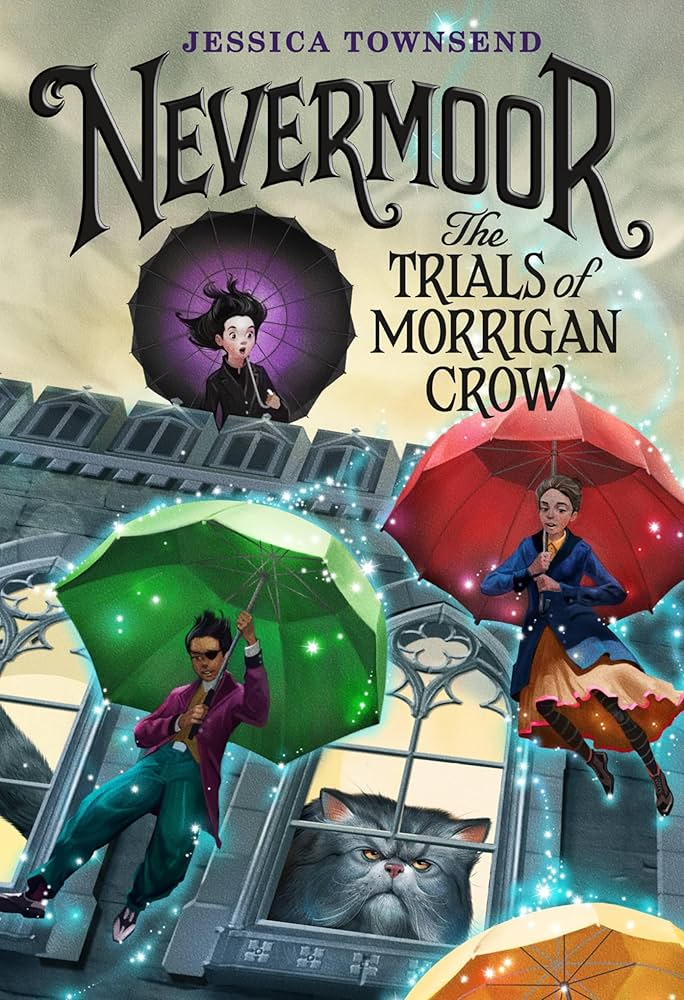
Nevermoor: The Trials of Morrigan Crow
by Jessica Townsend (Nevermoor #1)
Finished April 2026
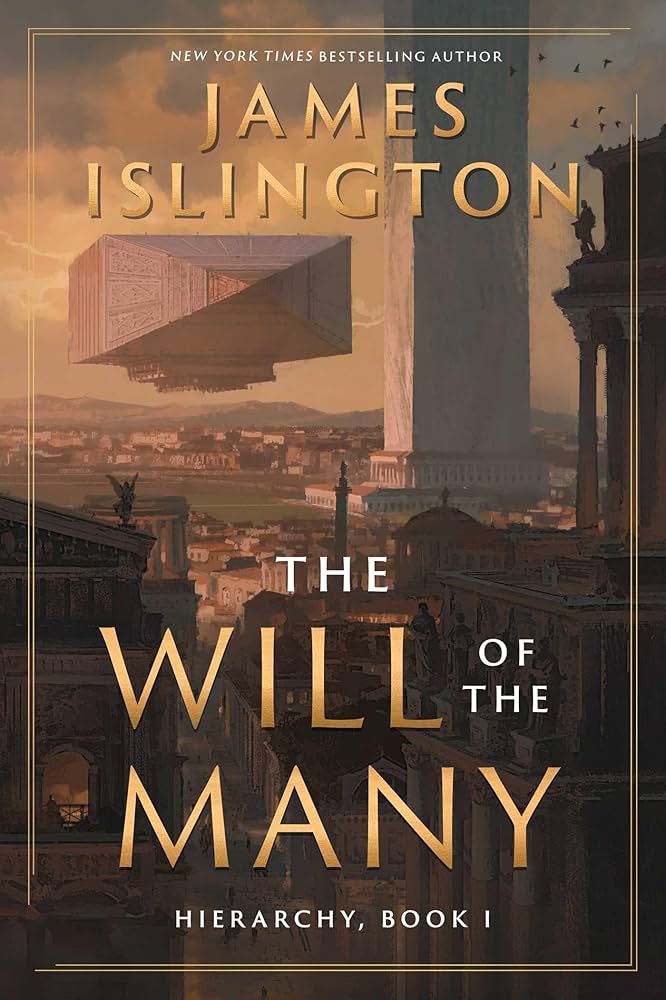
The Will of the Many
by James Islington (Hierarchy #1)
Finished March 2026
Show review ⏵
The whole time I was reading this book, I kept thinking, wow, this is really similar to The Name of the Wind by Patrick Rothfuss! And the worldbuilding reminds me a lot of what you would find in a Brandon Sanderson book. Imagine my vindication when I finished it and read the author's bio at the end to learn he was inspired to write The Will of the Many after reading The Name of the Wind and Brandon Sanderson's Mistborn trilogy! For me, the Mistborn comparison is extremely favorable. I think Brandon Sanderson is basically unparalleled in his worldbuilding skills, and I mean it as a huge compliment to say that the worldbuilding here is nearly on that level. It's a deeply planned dystopian world that feels extremely polished, and the way the worldbuilding is slowly communicated through dialogue and relevant small moments of exposition is extremely elegant for the depth that's at play here. I think the worldbuilding was my favorite part of the book, and it's the reason I'm chomping at the bit to get the next book in from the library. My comparison to Patrick Rothfuss is also quite favorable, but for different reasons. The Name of the Wind is one of the most highly praised fantasy books in its decade, it seems, but I personally had a really rough time getting through it. I won't go into detail here, since it probably merits its own book review. The important thing is: everything I thought The Name of the Wind failed to deliver on (for me), I thought The Will of the Many did better. The protagonist was focused and highly motivated by his situation, the supporting characters were likeable and I felt curious about them, the school setting was relevant and well-integrated into the story, and the magic system was pretty clear and well-defined. On a scale of Patrick Rothfuss to Brandon Sanderson, I'd put The Will of the Many just below Brandon Sanderson (and that's very high praise). It was a solid read that I couldn't put down for an entire week, and then the ending completely bamboozled me. I had to scrape my jaw off the floor and went around in a haze for the rest of the day, unable to think about anything else. I can't wait to read the second book and I have extremely high expectations for this series!
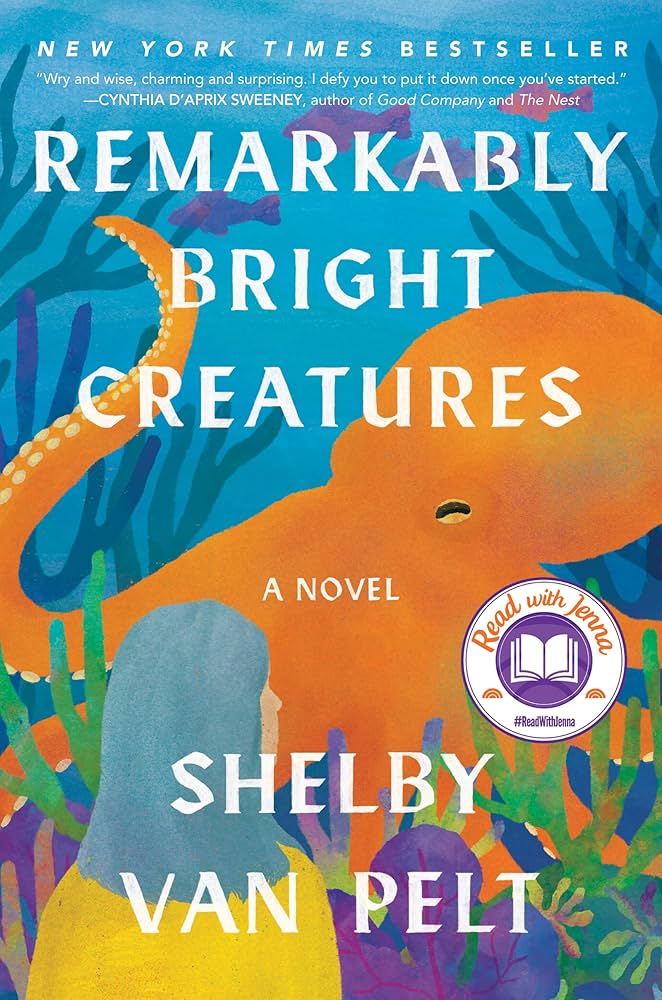
Remarkably Bright Creatures
by Shelby Van Pelt
Finished March 2026
Show review ⏵
This book's greatest strength is also its greatest weakness: the octopus is the best part. Remarkably Bright Creatures opens from the perspective of an octopus named Marcellus, who eloquently ruminates on his imprisonment in the aquarium he's lived in for most of his life. He knows, because of the plaque next to his tank, that his life will be ending soon. Marcellus's perspective is far and away the best part of the book. He is charming, observant, and extremely clever. Even with his very limited ability to leave his tank and the slow degrading of his body as his life drags toward its end, he finds ways to influence the plot with the limited tools he has at his disposal. His internal monologue is well-written and immediately likeable. Which is only a problem because there is not nearly enough Marcellus in this book. While chapter one is from the first-person perspective of Marcellus, who addresses the reader directly and seems very self-aware, chapter two cuts to the third-person perspective of an elderly woman named Tova. Tova is the janitor at the aquarium, working at night after all the guests have left. She discovers Marcellus's ability to leave his tank and saves him from a dangerous situation, earning the octopus's respect and trust. For the rest of the book, Marcellus's perspective only pops up every couple of chapters, with long stretches of octopus-less story in between from the perspective of several human characters. When he does get a chapter, they're usually quite short, almost always less than two pages and often only a couple short paragraphs. The humans' story is sweet, but very mundane when compared to the whimsical promise of "a book written from the perspective of an octopus." This mundanity isn't entirely a bad thing; the human plot is meaningful in its own way, a sweet and real lens into the the lives of its main characters, Tova and Cameron. It tackles the topic of being an elderly person with no living relatives, and the loneliness of facing the end of your life without your loved ones by your side. It is slow, and bittersweet, and introspective (or at least Tova's parts are—I never found myself caring for Cameron much, even by the end of the book, but I was happy he was there for Tova's sake because I did really like her). So it's not like the story fell flat; I did find myself thinking about it for a while after I finished it, returning to dwell on the themes raised by Tova's story. Overall, while it was quite different from the adventure-filled stories I usually read, I quite liked it and I'm glad I read it. Unfortunately, that didn't change my disappointment when I realized just how little Marcellus would be part of that story. His contributions are certainly not insignificant, and he tends to be involved in many (but not all) of the pivotal points in the story, but overall, an extraordinary amount of the story takes place outside the aquarium, where Marcellus could never go. I realize that there's only so much you can have your characters do in a book if you're keeping them trapped in an empty aquarium after hours as janitors, but I still think more time could have been spent there in order to involve Marcellus further. Some of the conversations had between Tova and Cameron could have been viewed from Marcellus's perspective, which could have been very unique and raised the tension of the story as Marcellus is frustrated by the humans not seeing the connection between them that is so obvious to him. As it is, although we know that Marcellus can understand human speech, we never once hear the other characters speak to him from his perspective. The tension never really builds, because every time we check in with Marcellus he's already formed a plan to sneak out of his tank and do some clever thing or other to manipulate the humans into solving the mystery themselves. We never see him unsure what to do, or making his plans, or despairing that they'll never figure it out. Even the ticking clock of Marcellus's shortening lifespan doesn't really raise the stakes because he never seems overly worried that he won't succeed in his task. And while he does find ways to influence the events outside his tank, creating pivotal changes in the plot, these changes are always viewed from the human perspective as they discover the clues he's left for them, so again we don't get to see Marcellus celebrate or plan his next move. Every time we check in for our precious little time with Marcellus's perspective, he's in pretty much the same mental state he always is, making even his delightful perspective start to feel a little old after a while and crippling the most interesting and well-written parts of the book. He's not even really angry or sad or scared about his imminent death; he's accepted it as a fact of life and therefore seems to feel no particular way about it. I would have liked to see a little more emotional range from him. I recognize that he's not the type of character to let strong emotions cloud his judgement, but if he's a character in a book, he should still HAVE emotions, even if it's in a way where he's tightly clamping down on them in order to remain logical and practical. Just one moment of him being broken by despair or driven to anger through frustration would have gone a long way, I think. At the end of the day, I did enjoy this book. Tova's story resonated with me and it was a nice change of pace from my usual genres. But, I can't help but be disappointed that this book narrated by an octopus has so little octopus in it, especially since the octopus in question was written in such a different, charming, and loveable way. It's the book's greatest strength, because it's a very unique perspective and I've never read anything quite like it before. But it's also the book's greatest weakness, because the extremely sparing way Marcellus's perspective is used in the story leaves you wanting more, and not in a good way. It leaves the rest of the story feeling slow and frustrating at times, because you want to get back to the aquarium, but it's also to the detriment of Marcellus's own scenes because we don't spend enough time with him or see him in enough critical moments to really get a sense of his character. Even though his character is the main draw of the book, and I'm sure the reason most people picked it up in the first place. So I give points for a bittersweet and ultimately heartwarming story, and I give points for the octopus, but I must also detract points for squandering the opportunities the octopus's perspective brings with it. 6.5/10: Not Enough Octopus.
Ducks
by Kate Beaton
Finished March 2026
Shadow Children
by Margaret Peterson Haddix (series)
Finished March 2026 (reread)
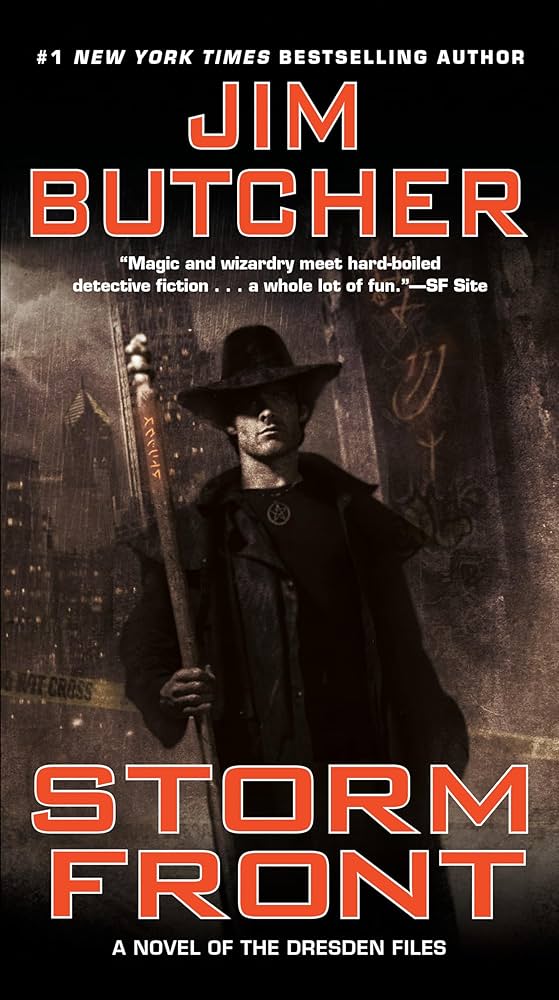
Storm Front
by Jim Butcher (The Dresden Files #1)
Finished February 2026
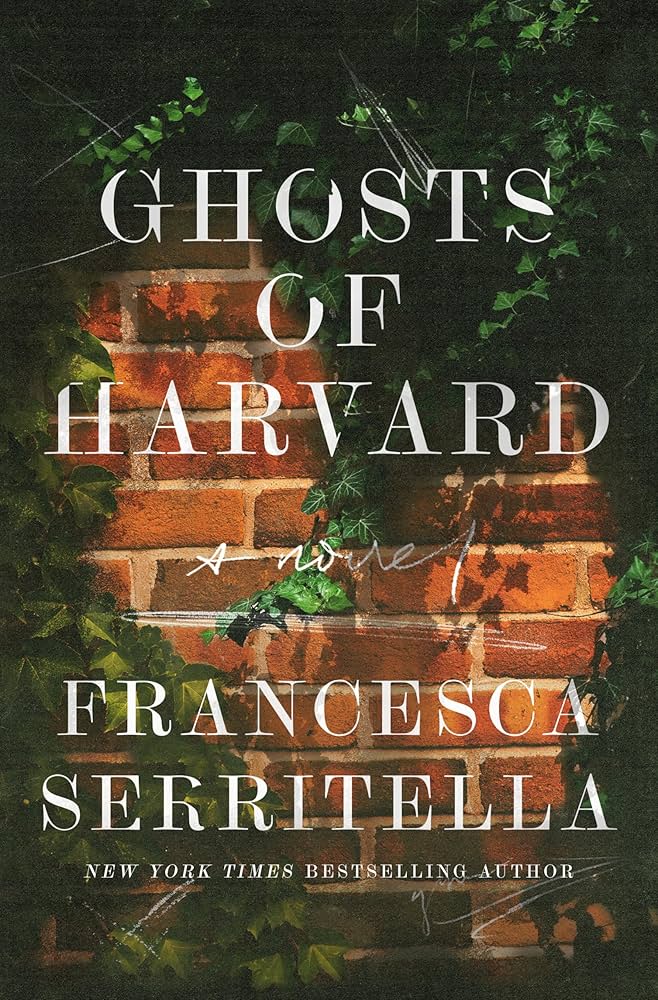
Ghosts of Harvard
by Francesca Serritella
Finished February 2026
Show review ⏵
Here's the story as I was sold on it from what I read on the back of the book: Our protagonist, Cady, had an older brother who developed paranoid schizophrenia while attending Harvard, which resulted in his committing suicide. Cady thinks there's something suspicious about the circumstances of his death, so she enrolls in Harvard as well so that she can investigate. Then, shortly after the semester begins, Cady starts hearing voices. Is she schizophrenic like her brother? Or is she actually hearing real ghosts? Is this what her brother heard, too, and if so, is she in danger of her life? What this premise led me to believe, given the title, was that her brother was not in fact schizophrenic but was somehow predisposed to be able to hear ghosts, as was Cady. There would be some mystery to unravel in which Cady would determine that her brother was NOT crazy but was instead somehow driven to suicide through his interactions with the dead people he was speaking to, and Cady herself would have to resist this same urge as she navigated a paranormal thriller type plotline. I was in the mood for a thriller, and this sounded like an interesting premise to me. Unfortunately, I sorely misguessed where the plot would lead. Cady IS hearing ghosts—that's made immediately very clear to the reader with no ambiguity, and Cady herself accepts it fairly easily after just a brief worry that she might be schizophrenic. So, there's very little tension created by raising the question of "is she schizophrenic?" because the answer is very quickly revealed to be "no" and we move on. Okay, fine. So, was her brother hearing these voices too? Are they what drove him to suicide? Is Cady in danger? Shockingly, at least to me, the answer to ALL of these questions is...also no. Her brother was not hearing these voices (as far as we know—the book never actually confirms whether or not he did, and Cady herself never asks any of the ghosts about it and they never bring it up. It's almost as if the author forgot to resolve this question. But as it's never confirmed he could hear the ghosts, I'm forced to conclude that he didn't). He committed suicide exactly the way everyone said he did. He did actually have paranoid schizophrenia and (as far as we know) was not influenced to suicide by any sort of paranormal activity. And Cady isn't in any danger from these ghosts and they're certainly not threatening to push her to suicide. All three ghosts she speaks to are friendly, cause her no harm, and in fact, don't even know they're ghosts. Okay, kind of anticlimactic, but let's move on. If Cady isn't in danger from the ghosts, where does the conflict come from? And in what clever ways does she utilize her relationships with these friendly ghosts to help her solve the problems she's facing? Well, in a twist I'll admit I did NOT see coming, the main plot and mystery turns out to be a literal Russian spy stealing US government secrets (from the Harvard physics department) that Cady has to expose. Her brother found out about this plot but because of his paranoia nobody believed him, and Cady now has to finish what he started and...save the country by uncovering this Russian spy, I guess. Not at all the direction I expected this book to take, and somehow, this felt more farfetched to me than a paranormal thriller about evil ghosts would have been. And, no, Cady does not gain any advantage from her ghost friends. The ghosts, which I must reiterate are real, actual dead people from the past that Cady is speaking to through unknown means, are almost completely tangential to the Russian spy plot. She like, learns life lessons from them, I guess, but I can't think of a single time her communicating with them actually moved the plot forward. She does have sex with one of them, under extremely weird curcumstances that made me very uncomfortable, but even that doesn't impact the plot, it's just a thing that happens. All three ghosts disappear, never to return, before the climax of the story begins. Aside from their symbolic relevance, you could tell this story entirely without the ghosts and it would make as much sense. Which is a really weird thing to be able to say for a story about ghosts! Needless to say, I was disappointed by this book. The premise that I imagined was far more interesting than the book actually turned out to be. By the time I reached the end, completely baffled by the Russian spy plot and the complete irrelevance of the ghosts, I was bored and annoyed and felt like the synopsis had tricked me by tantalizing me with all these juicy implied questions. Never would I have guessed that the answer to all of those interesting questions would be a flat, expressionless "no."
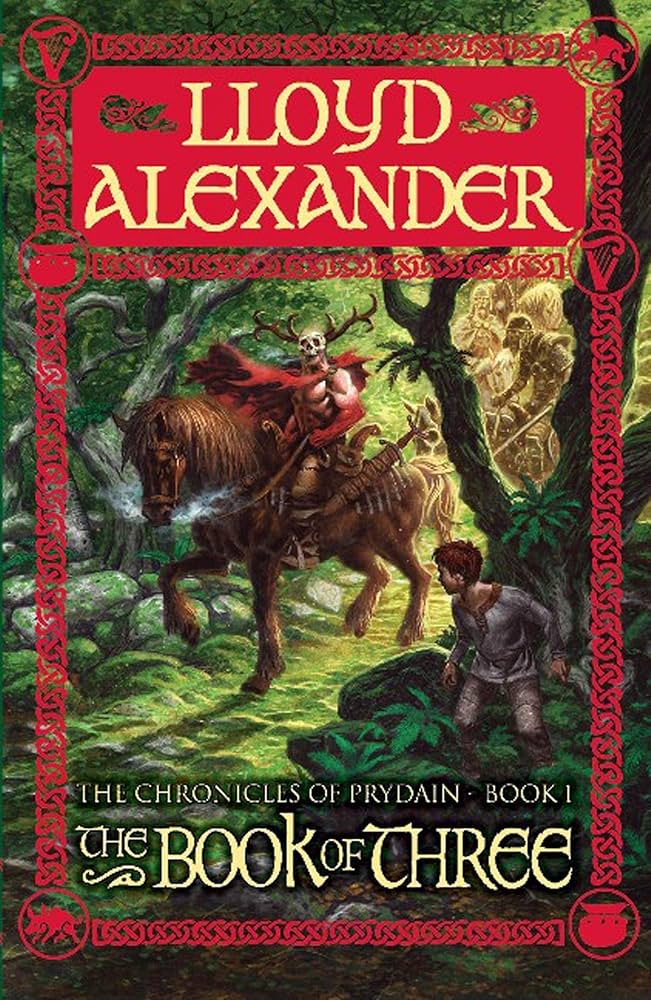
The Chronicles of Prydain
by Lloyd Alexander (series)
Finished January 2026 (reread)
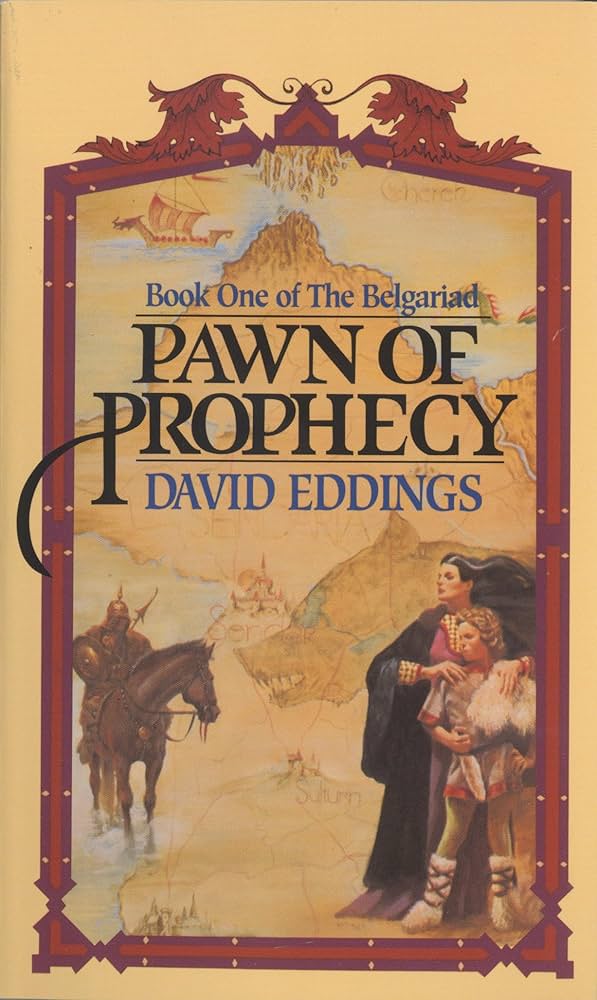
The Belgariad
by David Eddings (series)
Finished January 2026